
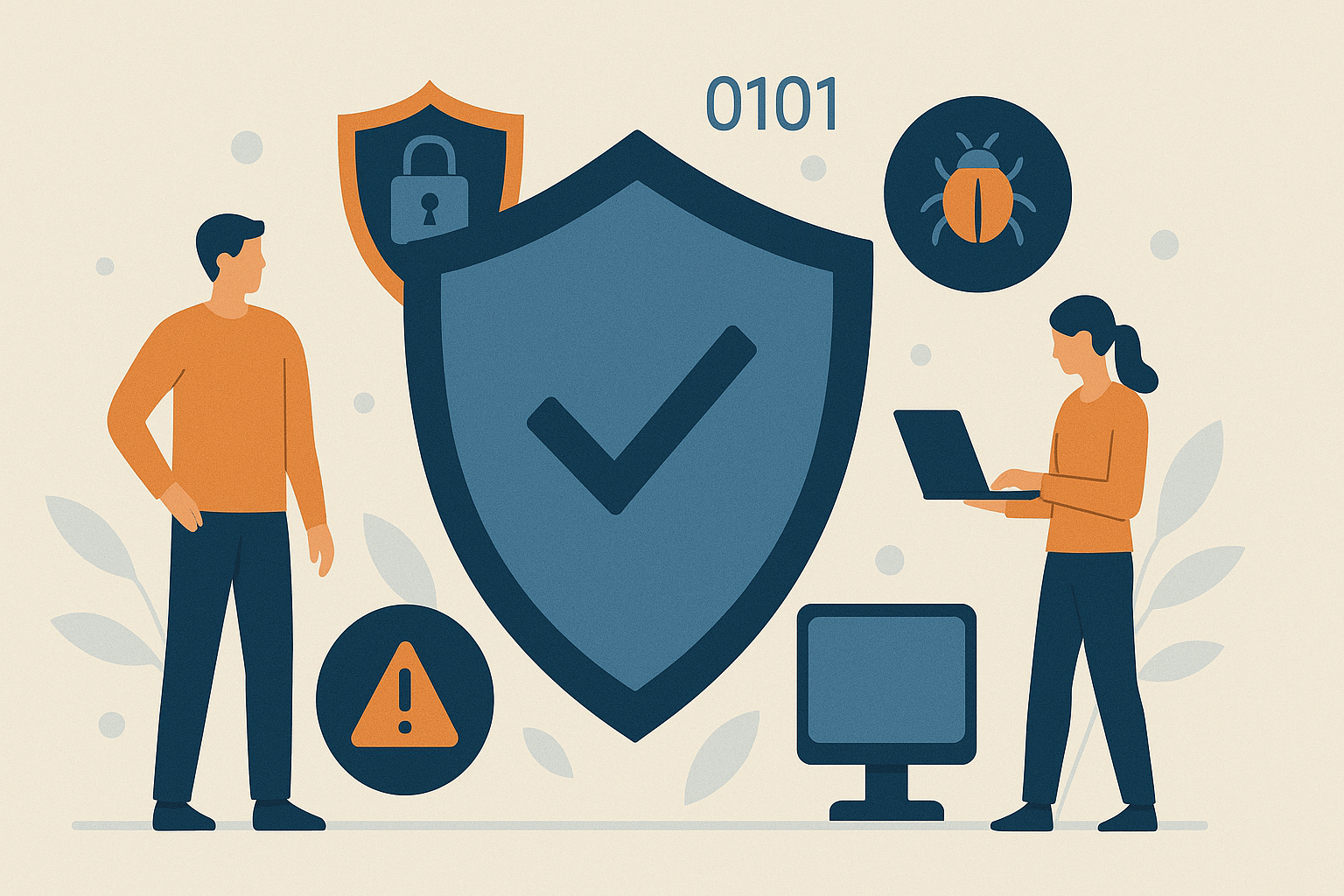
Why Your Cybersecurity Posture Matters: Strengthening Defenses Before A Breach
Veyrdune Insights

10/8/2025
A strong cybersecurity posture equals strong defenses. Strong defenses equal less risk. Your cybersecurity posture reflects your organization’s ability to identify, respond to, and prevent threats within its perimeter. At its core, it’s defined by the strength of your controls, policies, and readiness. A company is only as strong as its defenses.
According to IBM’s 2024 Cost of a Data Breach Report, organizations with a mature cybersecurity posture saved an average of $1.76 million per breach compared to those with weaker postures. As awareness grows, cyber insurers are increasingly using posture as a key underwriting factor, linking an organization’s security maturity directly to its insurability.
The concept of “posture” originates from military strategy, where it refers to readiness and configuration to deter or respond to threats. As cyber warfare expanded in the 2000s, cybersecurity adopted the same logic, measuring preparedness and resilience in the face of evolving digital attacks.
Frameworks such as the National Institute of Standards and Technology’s Cybersecurity Framework (NIST CSF 2.0) and the Cybersecurity Maturity Model Certification (CMMC 2.0) help organizations assess and strengthen posture through standardized approaches. These models provide a roadmap for identifying weaknesses, improving controls, and ensuring compliance.
However, Cisco’s 2024 Cybersecurity Readiness Index found that only 3% of organizations qualify as “mature” in their posture, while 71% remain at the “beginner” or “formative” level. To evolve, organizations should apply a Risk Assessment Framework that identifies key assets, maps vulnerabilities, and aligns strategies with standards like NIST or ISO 27001 to build a structured, measurable defense.
Cybersecurity Posture Assessments (SPAs) are essential tools for understanding risk and directing investment. As Brian Collins, global cybersecurity leader and advisor to Veyrdune, explains:
“SPAs help document a full review of risks. They zoom in on key domains, identifying vulnerable assets and directing investments that reduce breach risks and insurance claims. SPAs are not just best practice; they are fundamental and strategic protection.”
Technology alone doesn’t build a strong posture. True maturity requires trained employees, tested processes, and layered security tools such as multi-factor authentication (MFA), endpoint protection, and real-time threat monitoring. Human error remains the #1 attack vector (Usecure, referencing IBM), which makes continuous training and awareness just as critical as the tools themselves.
Posture is not static. It must evolve. As AI, quantum computing, and modern infrastructure advance, cyber threats will continue to grow in speed and sophistication. Companies that view posture as an ongoing discipline, not a one-time certification, are the ones that stay resilient.
Successful cyber executives stay ahead by prioritizing posture. It’s not just about preventing breaches. It’s about ensuring your organization is prepared, insurable, and trusted in a world where resilience defines success.
To learn more about cyber insurance, posture assessments, and resilience strategies, connect with Veyrdune and stay ahead of evolving threats!